
5 Worst Places to Grow Orchids (and Where They Thrive Instead)
Disclosure: As an Amazon Associate I earn from qualifying purchases. This post may contain affiliate links, which means I may earn a small commission if you click through and make a purchase – at no extra cost to you.
Orchids are breathtaking, but placement is everything. Put them in the wrong spot and you get wrinkled leaves, shriveled buds, and a plant that seems to sulk for months. Put them in the right spot and they reward you with glossy foliage and long, elegant blooms that last.
This guide walks through the 5 worst places to grow orchids and the simple fixes that help them thrive. You will also find a quick placement checklist, seasonal tips, and an easy plan for homes with lower light.
Quick rule of thumb: most beginner-friendly orchids like Phalaenopsis want bright, indirect light, stable temperatures near 65-75°F during the day and slightly cooler at night, moderate humidity around 40-60 percent, and gentle air movement. Keep that in mind as you read and your plant will tell you what it needs.
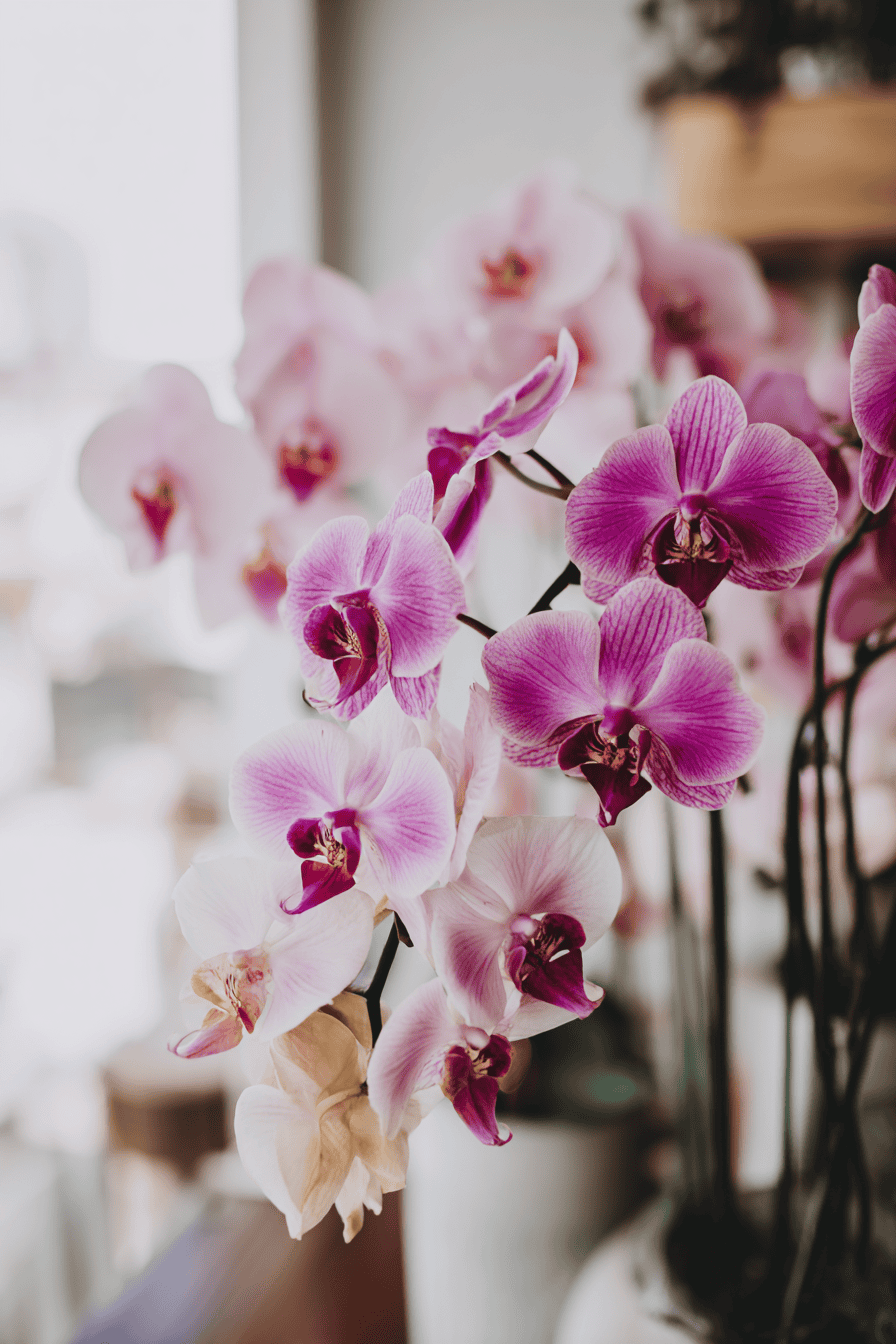
Direct Sunlight Windowsills
Orchids enjoy plenty of light, just not harsh midday beams that hit their leaves through glass. A south-facing windowsill in summer acts like a magnifying lens. Leaves bleach to a yellow-green, tips crisp, and buds dry before they ever open.
Symptoms you will see
- Leaves feel hot to the touch mid-day
- Faded yellow patches that later turn tan
- Buds that stall or drop shortly after forming
Do this instead
- Move the plant 12-36 inches back from the glass, or shift it to an east-facing window where light is bright in the morning and gentle by afternoon.
- Use sheer curtains to soften strong sun. A thin curtain still allows plenty of light for flowering.
- Rotate the pot a quarter turn each week for even growth.
My tip: I love bright rooms, so I keep my orchids near a sunny window but tucked just out of the sun path. If a hand shadow on the leaf looks fuzzy rather than sharp, the light is usually perfect.


Dark Corners
While direct sun burns, darkness starves. In low light, leaves stretch thin, new roots slow, and spikes never form. Dark corners are cozy for reading, not for orchids.
Symptoms you will see
- Deep dark green leaves that never thicken
- No new spikes after a full year
- Potting mix stays wet for many days because the plant is not actively using water
Do this instead
- Aim for bright, indirect light. An east or bright north window is ideal.
- If your home is naturally dim, add a grow light. Place the light 10-14 inches above the leaves for 10-12 hours daily.
- Choose the right orchid. Phalaenopsis handles lower light better than many others.
Grow light quick guide
- Look for full-spectrum LED fixtures rated near 5,000-6,500K.
- Keep leaves warm, not hot. If they feel warm, raise the fixture.
- Put the light on a simple outlet timer so the plant has a consistent day length.

Near Drafty Doors or Windows
Orchids are sensitive to rapid temperature swings. Drafts from frequently opened doors or leaky windows chill buds and stress roots. Even if the average room temperature is fine, sudden bursts of cold can cause bud blast.
Symptoms you will see
- Buds yellow and drop a week or two after forming
- Leaves wrinkle at the base from stress
- Pot feels cold after a windy day
Do this instead
- Keep orchids out of the direct draft path. A spot several feet away from doors, or behind a bookcase that breaks the airflow, is much calmer.
- Check nighttime temperatures near windows in winter. If they dip below 60°F, move the plant farther inside.
- Use weather-stripping on very drafty frames. Your plant and your heating bill will both be happier.
My tip: A small, quiet desk fan on the other side of the room creates gentle air movement and prevents stale corners without chilling the plant.

Overly Humid Bathrooms
Orchids appreciate humidity, but bathrooms often swing from steamy to cool in a short time. Constant damp air with poor circulation invites fungal spots and root rot, especially if the plant sits close to a shower.
Symptoms you will see
- Black spotting on leaves and petals
- Mushy roots when you unpot or peek through a clear liner
- A musty smell from the potting mix
Do this instead
- Give orchids moderate humidity and air movement. Group plants on a pebble tray filled with water that never touches the pot bottom, then run a small fan in the room.
- If you love the look of a bathroom orchid, place it far from the shower, crack a window after hot showers, and let a fan run while the room dries.
- Repot at the first sign of sour or soggy mix.

Near Heating Vents or Radiators
Dry hot air dehydrates leaves and shrivels buds. Vents and radiators also heat roots in one direction, which stresses the plant even if the rest of the room feels comfortable.
Symptoms you will see
- Buds fall right before opening
- Leaf tips turn brittle and brown
- Mix dries in a day while roots look silver and thirsty
Do this instead
- Place orchids away from direct airflow and two to three feet from radiators.
- Increase humidity to 40-60 percent in winter with a small humidifier set on low.
- Water a little more frequently during heating season, but only when the top of the medium is nearly dry.
Where Orchids Actually Thrive
The sweet spot is consistent, bright, indirect light with steady temperatures and modest humidity. Here are reliable placements that work in most homes.
Best window orientations
- East window: gentle morning sun and shaded afternoons. This is my favorite everyday location.
- Bright north window: great in spring and summer, sometimes a bit dim in winter.
- Filtered south or west window: use sheer curtains or set the plant two to four feet back from the glass.
Best rooms
- Living rooms and bedrooms with good daylight
- Home offices where a desk lamp or grow light can supplement naturally
- Kitchens with a bright window that does not blast midday sun
Placement recipe
- Put the plant where your hand casts a soft shadow on the leaf for most of the day.
- Keep day temps near 65–75°F, night near 60–65°F.
- Maintain humidity around 40–60 percent and keep the air gently moving.
- Water when roots shift from green to silvery and the top of the mix is nearly dry.

Seasonal Adjustments
Homes change with the seasons and orchids respond.
Summer
- Move plants farther from hot glass.
- Increase airflow and check pots more often because mix dries faster.
- Fertilize lightly every two to three waterings while the plant is actively growing.
Winter
- Slide plants closer to the window to maximize weak daylight, but keep them away from cold glass.
- Add a humidifier or pebble trays to counter dry indoor air.
- With shorter days, many orchids slow down. Water a bit less often.
Spring and fall
- This is prime spike season for many Phalaenopsis. Keep light bright and temperatures steady. Any big changes can disrupt spike growth.
Grow Light Guide for Low-Light Homes
If you love orchids but your home has limited daylight, a small LED grow light works wonders.
How to set one up
- Choose a full-spectrum LED in the 5,000-6,500K range.
- Position the fixture 10-14 inches above the leaves.
- Run it for 10-12 hours daily on a simple timer.
- Keep the leaves warm, not hot. If they feel warm, raise the light an inch or two.
Benefits
- Predictable blooming even in apartments with shaded windows
- Stronger roots and thicker leaves
- Consistent growth in winter

Humidity, Water, and Air
Humidity
Aim for 40-60 percent. A small cool-mist humidifier on low near the plant is perfect. Pebble trays also help. Never let the pot sit in water.
Watering
Water thoroughly until water flows from the drainage holes, then let excess drain completely. Water again when the top of the medium is nearly dry and roots start to look silvery. In most homes this is 7-10 days in spring and summer and a little longer in winter.
Air movement
Gentle airflow keeps leaves dry and prevents fungal spots. A quiet fan on low across the room is enough. Avoid gusts from heating and AC vents.
Potting Mix, Pots, and Repotting
Potting mix
Use an orchid mix with bark as the base. You can add a little sphagnum moss for moisture retention if your home is very dry. Mix should drain quickly but still feel slightly moist for a day or two after watering.
Pots
Clear plastic orchid pots help you see root color and moisture level. Slip that liner into a decorative cachepot for style.
Repotting timeline
- Every 12-18 months, or sooner if the mix breaks down and stays soggy, roots circle tightly, or you see salt crust.
- Repot after flowering. Trim dead roots with clean shears and tuck the plant slightly higher in the pot so the crown stays dry.
Quick Troubleshooting
Wrinkled leaves
Usually dehydration from underwatering or very low humidity. Soak the pot well, then return to a normal schedule. Check for dry air near vents.
Yellow leaves
One old leaf yellowing is normal. Many leaves yellowing at once points to too much light or a rotting root system.
No blooms this year
Light is usually the issue. Increase brightness with an east window or a grow light. Some orchids need a gentle night temperature drop in fall to set spikes.
Mushy roots
Mix is staying wet too long. Repot into a fresher, bark-heavy mix and let the plant dry slightly between waterings.
Orchid Placement Checklist
Final Thoughts
The secret to thriving orchids is not complicated. Give them steady conditions and a calm spot with generous, indirect light. Avoid the five problem locations in this guide, watch how your plant responds for a week or two, then make small tweaks. With a good placement, even a beginner can enjoy long, graceful blooms that feel like a quiet luxury at home.
You’ll also love
- How to Make a Spooky Halloween Theme Feel Cozy
- Minimalist Thanksgiving Decor Ideas for a Simple and Stylish Holiday
- Blue Fall Decor Ideas
FAQs
Yes, but they still need bright, indirect light. If windows are dim, use a small LED grow light for 10-12 hours daily.
Most Phalaenopsis thrive with day temps near 65-75°F and night near 60-65°F. Avoid cold drafts and hot vents.
Water when the top of the mix is almost dry and roots look silvery. This is commonly every 7-10 days, a bit longer in winter.
Yes if the bathroom has bright, indirect light and good ventilation. Place plants away from the shower and keep air moving.
Near an east window or a bright north window with stable temperature and moderate humidity. Filter strong light with sheers.
Feed lightly during active growth with a balanced orchid fertilizer at quarter strength every second or third watering. Skip feeding if the mix is very fresh or the plant is resting.


One Comment